

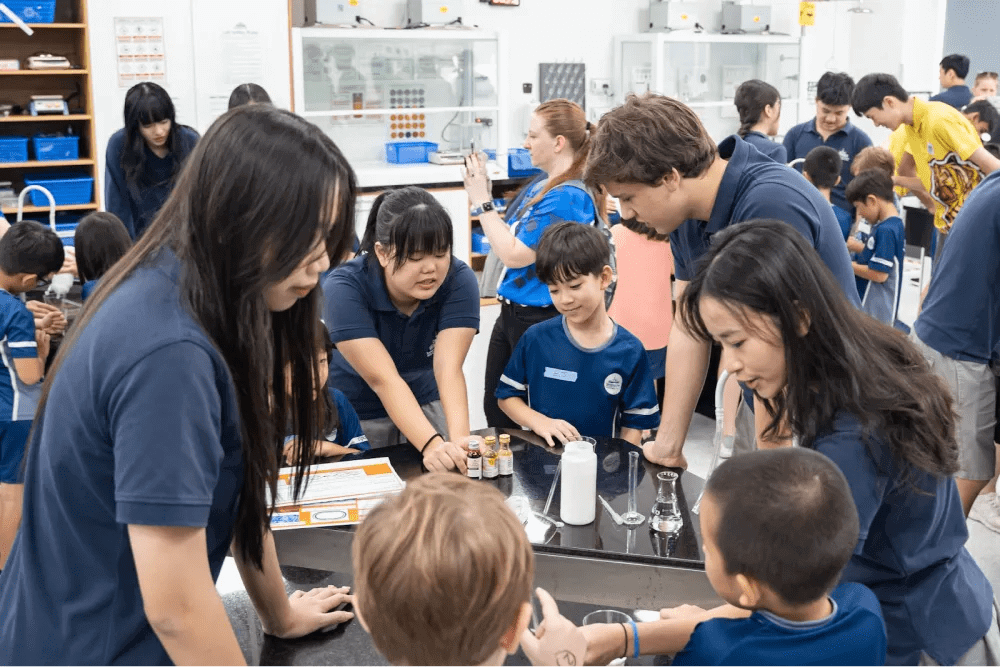
The Middle Years Programme plays a major role in shaping students into confident, capable, and future-ready learners. Designed for students between the ages of 11 and 16, the programme focuses not only on academic performance but also on practical life skills. Through project-based tasks, inquiry-driven learning, and reflective assessments, students gradually build abilities that help them succeed both inside and outside the classroom.
One of the strongest advantages of the IB MYP is its assessment structure. Instead of relying only on traditional examinations, the programme evaluates students through presentations, projects, research work, group activities, reflections, and real-world applications. This balanced approach allows learners to strengthen multiple skills while understanding concepts more deeply.
Critical Thinking and Problem-Solving Skills
One of the most important skills developed through MYP assessments is critical thinking. Students are encouraged to analyze situations, evaluate information, and form logical conclusions rather than simply memorizing answers. Assessments often require learners to investigate real-world challenges and propose practical solutions.
This approach helps students become independent thinkers who can apply classroom knowledge in meaningful ways. Whether solving mathematical problems, analyzing scientific concepts, or exploring global issues, learners develop the confidence to think creatively and logically.
Communication Skills
Strong communication is another essential skill nurtured through MYP assessments. Students regularly participate in presentations, discussions, debates, and collaborative projects that improve both verbal and written communication.
As part of the learning process, students learn how to express ideas clearly, organize thoughts effectively, and present information confidently. These experiences help learners become comfortable sharing opinions, listening to others, and engaging in productive discussions. Effective communication skills also prepare students for future academic and professional environments.
Research and Analytical Abilities
Research-based assignments are an important part of the MYP learning experience. Students learn how to gather information from different sources, evaluate its reliability, and use it responsibly in their work.
Through these assessments, learners build analytical abilities that help them understand complex topics in greater detail. They also develop skills in organizing information, interpreting data, and drawing conclusions based on evidence. Such abilities are highly valuable in higher education and future careers.
Time Management and Organization
The assessment structure of the programme encourages students to manage multiple tasks efficiently. Learners often work on long-term projects, assignments, and presentations simultaneously, which teaches them how to plan their schedules effectively.
By handling deadlines and balancing academic responsibilities, students improve their organizational skills and become more disciplined learners. These habits help students become more responsible and better prepared for future academic challenges.
Collaboration and Teamwork
Many MYP assessments involve group activities and collaborative projects. Students learn how to work with peers from different backgrounds, share responsibilities, and contribute toward common goals.
Team-based learning experiences help students understand the value of cooperation, respect, and leadership. They also improve interpersonal skills by teaching learners how to communicate effectively within a team and solve conflicts constructively.
Creativity and Innovation
Creativity is strongly encouraged throughout the programme. Assessments often allow students to explore ideas in unique and imaginative ways through design projects, artistic presentations, and innovative problem-solving activities.
This freedom encourages learners to think beyond standard answers and develop original ideas. Creative thinking becomes an important skill that supports academic growth and personal development.
Self-Reflection and Independent Learning
Reflection is an important component of the assessment process. Students are encouraged to review their own progress, identify strengths, and understand areas that need improvement.
This habit of self-reflection helps learners become more aware of their learning styles and personal goals. Over time, students develop independence, confidence, and the ability to take ownership of their education.
Global Awareness and Real-World Understanding
Assessments in the programme are often connected to real-life situations and global issues. Students explore topics related to culture, sustainability, technology, and society, helping them build a broader perspective of the world.
This approach develops empathy, open-mindedness, and international awareness. Students become more prepared to engage with diverse communities and understand challenges from multiple viewpoints.
Conclusion
The assessment approach followed in the IB MYP goes far beyond academic evaluation. It focuses on developing essential life skills that prepare students for future success in education, careers, and personal growth. From communication and collaboration to critical thinking and creativity, learners gain abilities that remain valuable throughout life.
By participating in meaningful projects, reflective learning experiences, and practical assessments, students in the IB MYP become confident individuals who are ready to face real-world challenges with knowledge, responsibility, and a global mindset.

