

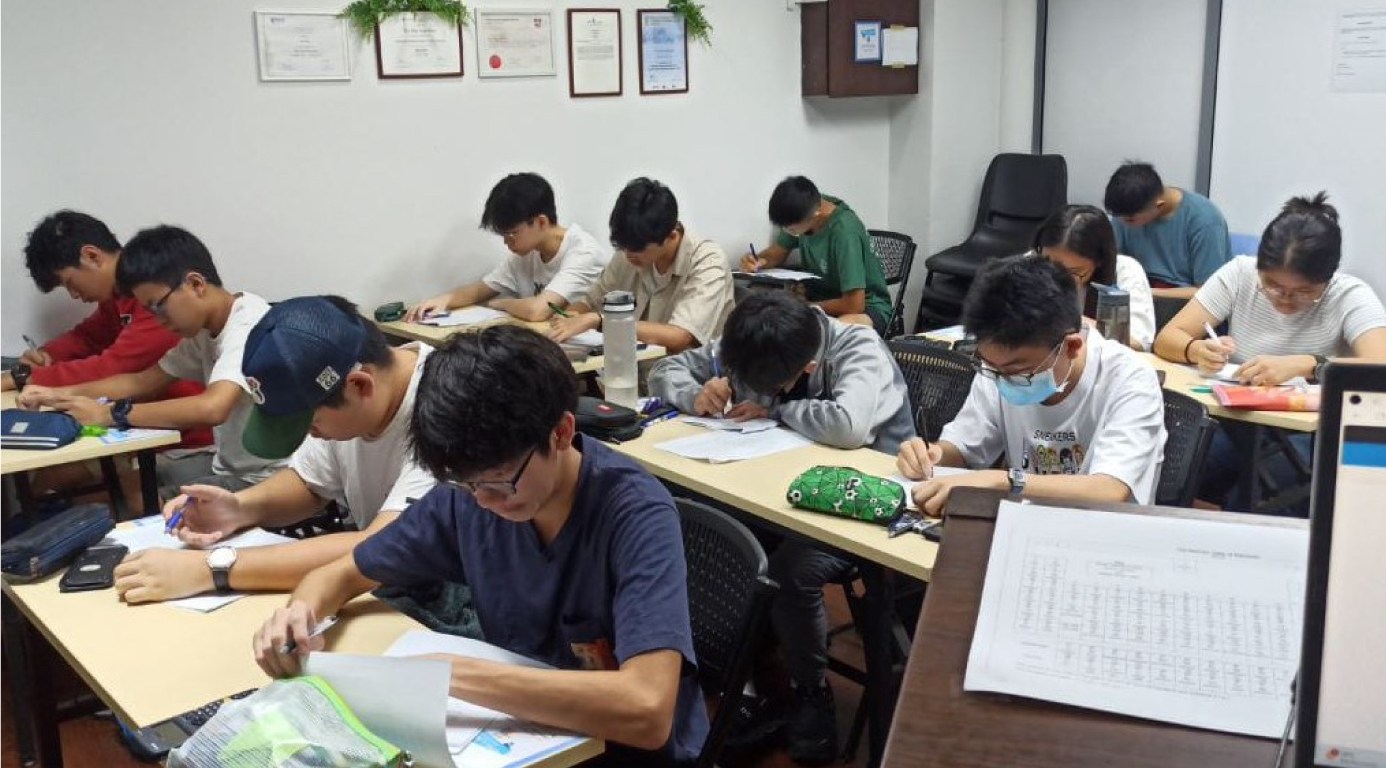
Secondary chemistry tuition in Singapore has become one of the most sought-after academic support services for students navigating what is widely regarded as one of the most challenging subjects in the upper secondary curriculum. Chemistry introduces a level of abstraction, mathematical rigour, and conceptual complexity that many students find difficult to manage through classroom learning alone. Targeted tuition that addresses specific gaps and builds genuine understanding is often the difference between a student who struggles and one who excels.
Why Secondary Chemistry Is Challenging
Chemistry at the secondary level demands simultaneous mastery of several different types of knowledge. Students must understand and recall significant volumes of factual content, including the periodic table, chemical reactions, and laboratory procedures. They must apply quantitative reasoning skills to solve mole calculations, stoichiometry problems, and electrochemistry equations. And they must reason conceptually about electron behaviour, bonding, and reaction mechanisms in ways that cannot be reduced to simple memorisation.
For many students, the difficulty is not effort or intelligence but the absence of a coherent mental model of how chemistry works. Classroom instruction moves at a pace determined by the syllabus rather than by individual student understanding, leaving gaps that compound over time. Secondary chemistry tuition addresses these gaps systematically, identifying where each student’s understanding breaks down and building from that point.
What Effective Chemistry Tuition Looks Like
The most effective chemistry tuition programmes for secondary students are those that combine content mastery with examination technique. Understanding the chemistry is necessary but not sufficient. Students also need to know how to read examination questions carefully, identify what each question is asking for, structure their responses to earn full method marks, and manage their time effectively across a paper with multiple question types.
An experienced chemistry tutor builds both dimensions simultaneously, using past examination questions not just as practice material but as a window into the examiner’s expectations and the specific conceptual pitfalls that questions are designed to probe.
The Role of Small Group and Individual Tuition
Chemistry exam preparation benefits significantly from small-group or individual tuition formats that allow the tutor to assess each student’s understanding in real time and adjust their explanation accordingly. In a class of thirty, a chemistry teacher cannot know which students have understood a concept and which are nodding along without comprehension. A small-group tutor can, and this responsiveness is one of the most powerful features of effective supplementary instruction.
Former Minister for Education Heng Swee Keat has observed that “every student has the potential to do well when given the right support and the right environment.” Chemistry tuition that provides this environment, one of attentive, responsive, and expert instruction, is the most direct way to unlock that potential for students who are capable but not yet performing to their ability.
Choosing the Right Tuition Programme
When selecting a secondary chemistry tuition programme in Singapore, parents and students should consider the tutor’s academic qualifications and teaching experience in chemistry specifically, the programme’s approach to examination preparation, including past paper practice and marking feedback, the class size and whether it allows sufficient individual attention, and the ability to track and communicate progress to parents.
Testimonials from students who have improved their grades through the programme, particularly those who struggled with chemistry before tuition, are among the most reliable indicators of a programme’s effectiveness. Secondary chemistry tuition that produces measurable improvements in examination results, and builds students’ confidence in their own abilities along the way, delivers value that extends well beyond the O or A level examination itself.

